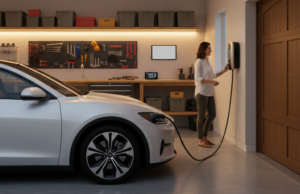
Congratulations you’ve made the switch to an electric vehicle. Whether you just drove home a brand-new Tesla Model 3, a Ford F-150 Lightning, or a Chevy Equinox EV, one question is already on your mind: how do I charge this thing efficiently at home? and Should I install a Level 1 or Level 2 EV charger at home?
For homeowners across New York City, this decision carries real consequences. Plug into the wrong setup and you could wake up every morning with a half-charged car. Choose the right home EV charging station, and you’ll never visit a gas station again.
The two main options are Level 1 and Level 2 EV chargers. They look similar. They both charge your car. But the differences in speed, cost, installation requirements, and long-term value are significant and the right choice depends entirely on your lifestyle.
Understanding Best Home EV Charger
Electric vehicles charge by drawing power from your home’s electrical system. The charger itself controls how quickly electricity flows into the battery.
Residential EV charger systems are generally divided into two categories:
- Level 1 EV Charger
- Level 2 EV Charger
Both can charge your vehicle safely, but they differ significantly in charging speed, electrical requirements, installation complexity, and long-term practicality.

What Is a Level 1 EV Charger?
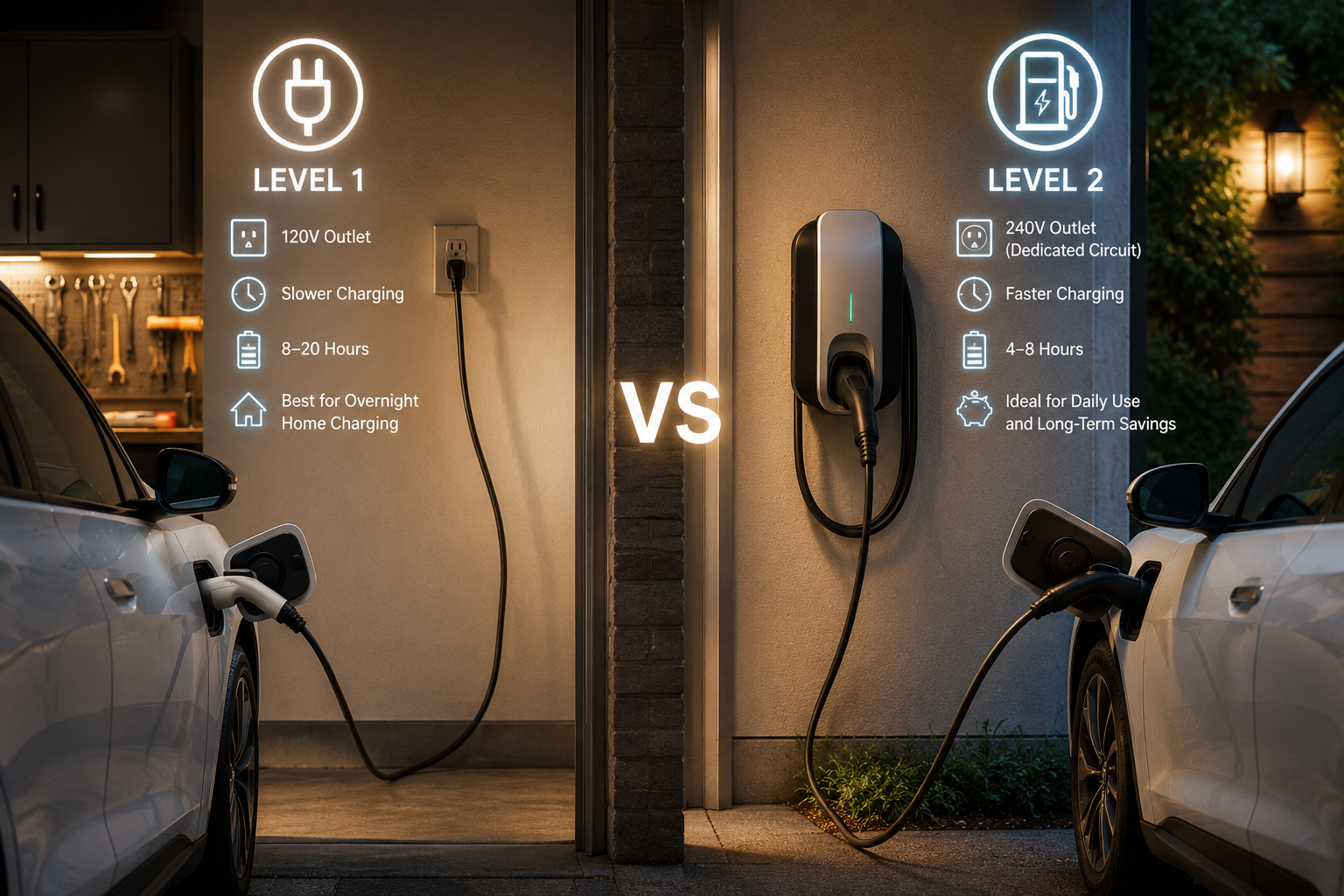
A Level 1 EV charger uses a standard 120-volt outlet the same type of outlet found throughout most homes.
Most electric vehicles already come with a Level 1 charging cable from the manufacturer, allowing homeowners to start charging immediately without major electrical work.

How Level 1 Charging Works
You simply plug the charger into a regular grounded outlet and connect it to your EV.
Typical Charging Speed
- Around 3–5 miles of driving range per hour
- Full charge may take 20–50 hours depending on battery size
Best Uses for Level 1 Charging
A Level 1 EV charger may work well if:
- You drive short distances daily
- You own a plug-in hybrid
- You work from home
- You rarely deplete your battery
- You want a temporary charging solution
Advantages of Level 1 EV Chargers
Lower Upfront Cost
Since no major electrical upgrades are usually needed, Level 1 charging is the most affordable option initially.
Easy Setup
In many cases, homeowners can simply plug in and begin charging immediately.
Good for Occasional Drivers
If your EV usage is light, slower charging may not be an issue.
Limitations of Level 1 Chargers
Extremely Slow Charging
This is the biggest drawback. Many homeowners quickly discover that overnight charging is not enough for larger EV batteries.
Outlet Safety Concerns
Older homes in New York may have aging outlets or wiring not designed for continuous EV charging loads.
Limited Long-Term Practicality
As EV batteries get larger, Level 1 charging becomes less convenient for everyday use.
What Is a Level 2 EV Charger?
A Level 2 EV charger uses a dedicated 240-volt circuit, similar to the power requirements for electric dryers or ovens.
This is the most popular option for modern home EV charger installation projects because it dramatically reduces charging time.

How Level 2 Charging Works
A licensed electrician installs a dedicated 240-volt charger connected directly to your electrical panel.
Typical Charging Speed
- Around 20–40 miles of range per hour
- Full charge often completed overnight
Best Uses for Level 2 Charging
A Level 2 EV charger is ideal if:
- You drive daily
- You own a fully electric vehicle
- You commute long distances
- Your household has multiple EVs
- You want faster, more reliable charging
Advantages of Level 1 EV Chargers
Much Faster Charging
Most homeowners can fully recharge overnight.
Better Daily Convenience
You spend less time worrying about battery range and charging schedules.
Increased Home Value
Professional electric vehicle charger installation can make your property more attractive to future buyers.
Energy Efficiency
Many modern Level 2 chargers include smart energy management features, scheduling tools, and mobile app controls.
Level 1 vs Level 2 EV Charger Comparison
Feature | Level 1 Charger | Level 2 Charger |
Voltage | 120V (standard outlet) | 240V (dedicated circuit) |
Charging Speed | 3–5 miles of range per hour | 25–30 miles of range per hour |
Full Charge Time | 20–40+ hours | 4–8 hours |
Installation Cost (NY) | $0–$300 | $800–$2,500+ |
Electrical Work Required | None (plug-in) | Licensed electrician required |
Permit Required in NY | Typically no | Yes, in most cases |
Best For | Occasional/short-trip drivers | Daily commuters, multi-EV households |
Long-Term Value | Limited | High — adds home resale value |
Which EV Charger Is Better for Your Home?
Choose Level 1 Charging If:
A Level 1 charger may be enough when:
- You drive fewer than 30 miles daily
- You own a hybrid EV
- You rent your property
- You need a temporary solution
- Your budget is very limited
The right charger depends on your driving habits, home electrical system, and long-term plans.
Choose Level 2 Charging If:
A Level 2 charger is typically the better investment when:
- You rely on your EV every day
- You commute across New York regularly
- You own a Tesla or larger battery EV
- You want future-ready charging
- You need faster charging during winter
- Multiple drivers share the vehicle
Installation Requirements for Level 1 and Level 2 Chargers
Level 1 Installation Requirements
Although Level 1 chargers are simpler, safety still matters.
Homeowners should ensure:
- The outlet is properly grounded
- The circuit is not overloaded
- Wiring is in good condition
- Outdoor outlets are weather-protected
Older homes in New York may require electrical inspection before continuous EV charging use.
Level 2 Installation Requirements
Level 2 EV charger installation is more involved and should always be handled by a licensed electrician.
Requirements usually include:
- Dedicated 240-volt circuit
- Proper breaker sizing
- Heavy-duty wiring
- Electrical panel capacity verification
- Charger mounting
- Code-compliant installation
- Permit approval when required
Electrical Panel, Wiring & Permit Considerations in New York
New York has some of the most comprehensive electrical codes in the country, and for good reason — safe wiring protects your home, your family, and your investment. Here’s what every homeowner should know before installing a Level 2 charger:
Electrical Panel Capacity
Most Level 2 chargers require a 40–60 amp dedicated breaker. If your panel is already at capacity very common in older NYC homes and pre-war buildings you’ll need a panel upgrade before installation can proceed. This is not a DIY task. It requires a licensed master electrician.
Wiring Requirements
The wire gauge, conduit type, and routing path all matter. In New York City, EMT (electrical metallic tubing) conduit is typically required for exposed runs. Outdoor installations must use weatherproof conduit and outlet covers. All wiring must meet NEC (National Electrical Code) and local NYC or New York State building codes.
Permits for EV Charger Installation in New York
In most New York jurisdictions including NYC’s five boroughs, Nassau County, Suffolk County, Westchester, and municipalities Upstate a permit is required for any new 240V circuit installation. Pulling a permit is not optional. Unpermitted electrical work can:
- Void your homeowner’s insurance policy
- Create liability if a fire or electrical fault occurs
- Cause problems when selling your home
- Result in fines from your local municipality
Lightsmith Electric handles all permitting and inspections as part of every Level 2 installation.
EV Charger Cost in New York
Homeowners often ask about EV charger installation cost in New York. Pricing depends on several factors.
Level 1 Cost
Equipment: $0–$200 (often included with your EV)
Installation: $0 if an outlet already exists; $150–$300 if a dedicated outlet is needed
Total: $0–$300
Level 2 Cost
Charger Equipment: $300–$800 (brands like ChargePoint, Enel X JuiceBox, Emporia, Tesla Wall Connector)
Installation Labor: $500–$1,200 depending on panel distance and complexity
Permit Fees (NYC/NY): $100–$300
Panel Upgrade (if needed): $1,500–$4,000 additional
Total Range: $800–$2,500+ (most NY homeowners pay $1,000–$1,800 for a standard install).
Good News for New York Homeowners: • Federal Tax Credit: The Alternative Fuel Vehicle Refueling Property Credit (Form 8911) may cover up to 30% of your EV charger installation cost. • Con Edison, PSEG Long Island, and National Grid may offer rebates on qualifying Level 2 charger installations. • New York State offers additional incentives through NYSERDA for clean energy upgrades. • Ask your Lightsmith Electric technician about current rebate programs when scheduling your install. |
Common Mistakes to Avoid When Installing a Home EV Charger
1. Assuming your panel can handle it. Always have an electrician assess your panel capacity before purchasing a charger. Overloaded panels are a serious fire hazard.
2. Skipping the permit. No matter how small the job seems, a new 240V circuit in New York requires a permit. Don’t skip it.
3. Choosing the wrong amperage. A 40-amp circuit future-proofs your home for higher-speed chargers. Don’t install a 20-amp circuit and limit your options later.
4. Poor location planning. Mount your charger where the cable comfortably reaches your car’s charging port. Think about where you park, not just where the panel is.
5. Ignoring outdoor requirements. If your charger is outside or in an unheated garage, it must be rated for outdoor use and properly weatherproofed especially important for New York winters.
6. DIY installation. In New York, electrical work on 240V circuits must be performed by a licensed electrician. Period.
7. Not asking about rebates. Thousands of New York homeowners leave money on the table by not claiming available federal tax credits and utility rebates.
Final Thoughts: Which EV Charger Should You Install?
For homeowners who drive occasionally and want the simplest solution, a Level 1 EV charger may be enough temporarily.
But for most New York homeowners, a Level 2 EV charger offers significantly better convenience, faster charging, improved efficiency, and stronger long-term value.
A professionally installed 240-volt charger can make daily EV ownership easier, safer, and more practical especially as electric vehicles continue becoming more common.
If you are planning a home EV charger installation, working with a trusted licensed electrician ensures your system is safe, code-compliant, and built for long-term reliability.
Contact Lightsmith Electric for a Free EV Charger Installation Estimate.