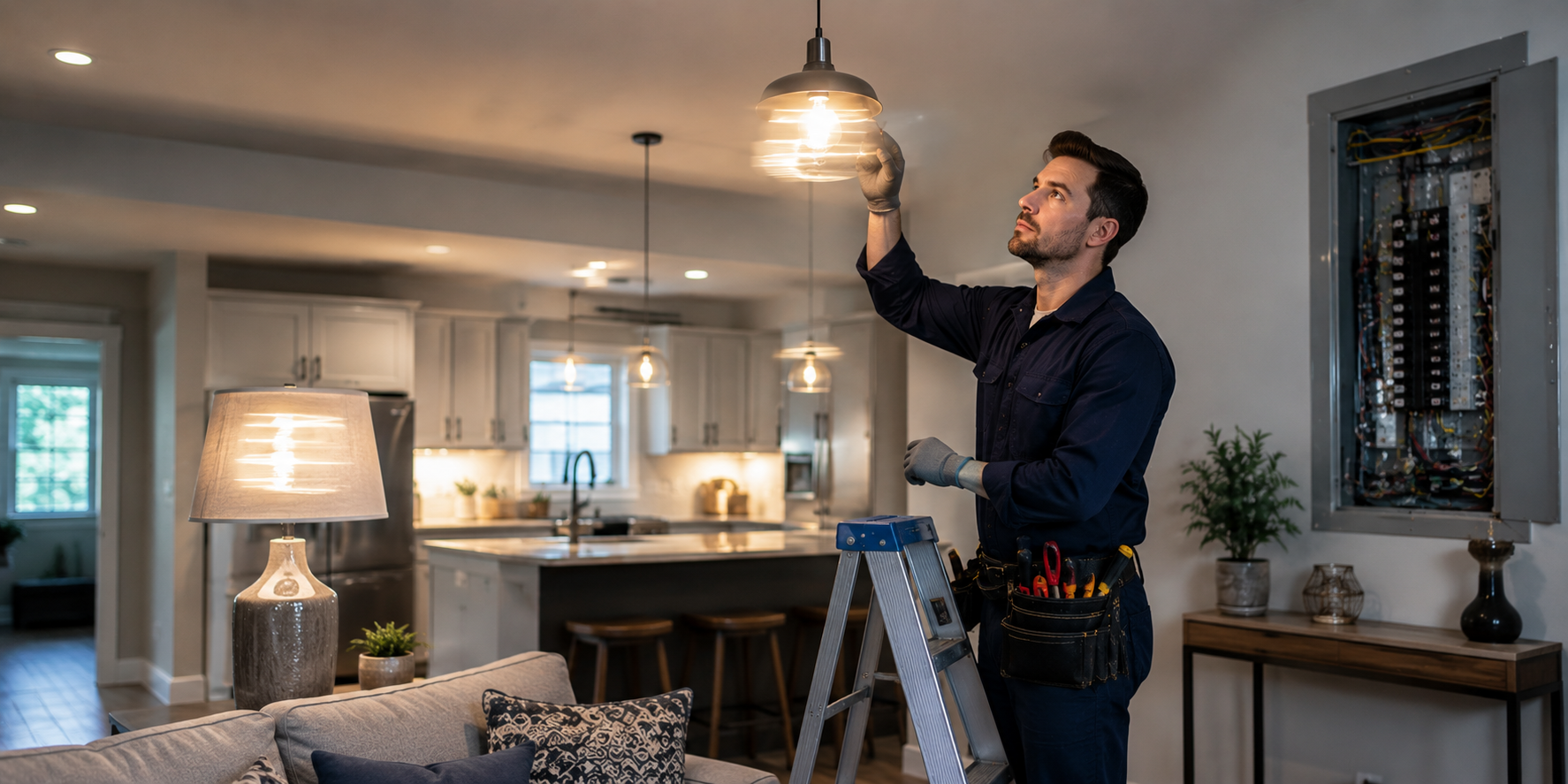
Lights flickering in your house is usually caused by a loose bulb, an incompatible dimmer switch, or an overloaded circuit, all easy fixes. But if multiple lights flicker at once, or you notice buzzing, burning smells, or warm outlets, that’s a sign of loose wiring or a deeper electrical problem, and you should call a licensed electrician right away.
Flickering lights aren’t always dangerous, but they’re never something to just ignore. Below, we break down exactly what’s causing it, how to troubleshoot it yourself, and the warning signs that mean it’s time to stop guessing and get a professional involved.
8 Common Causes of Flickering Lights
1. Loose or Dying Bulb
The most common reason for a single light flickering in a house is simply a bulb that isn’t screwed in tightly, or one that’s reaching the end of its life. This is the easiest cause to rule out and costs nothing to check.
2. Incompatible Dimmer Switch
Older dimmer switches aren’t built for LED bulbs. If you’ve swapped to LEDs and now the light flickers, the dimmer itself may be the problem, not the bulb or the wiring.
3. Failing LED Driver or Ballast
LED bulbs and fluorescent fixtures rely on a driver or ballast to regulate power. When that component starts to fail, you’ll often see flickering before the light goes out completely.
4. Overloaded Circuit
Overloaded circuit lights are common in older homes where too many appliances or devices are pulling power from the same circuit. If your lights flicker when you run the microwave, hair dryer, or AC, this is likely the cause.
5. Loose Wiring Connection
Loose wiring flickering is one of the more serious causes on this list. A wire that isn’t fully connected can create arcing small, repeated electrical discharges which not only causes flickering but can also generate heat. Loose wiring can cause electrical fires, which is why this cause should never be ignored if it’s suspected.
6. Voltage Fluctuations
Voltage fluctuations inside your home’s electrical system can cause lights to dim or brighten unexpectedly. This can stem from an issue inside your panel or from an external source, like the utility grid.
7. Outdated Electrical Panel
Homes with older electrical panels weren’t designed for today’s power demands. An outdated panel struggling to keep up with modern appliances, HVAC systems, and electronics is a common source of whole-house flickering.
8. Utility Company Issues
Sometimes the problem isn’t inside your home at all. Utility company issues like problems with a transformer or a shared power line can cause flickering that affects your neighbors too. If everyone on your street is dealing with the same issue, it’s likely not your wiring.
Simple Light Flickering Troubleshooting Checklist
Before assuming the worst, run through this quick checklist:
- ✅ Tighten or replace the bulb — rule out the simplest fix first
- ✅ Test another fixture — see if the flickering follows the bulb or stays with the fixture
- ✅ Check if the dimmer is compatible — look for “LED-compatible” on the dimmer switch
- ✅ Note when the flickering happens — is it tied to appliances turning on, weather, or random?
- ✅ Check if it’s one room or the whole house — this single detail tells you a lot about severity
If you’ve gone through this list and the flickering continues, or it’s affecting more than one room, it’s time to bring in professional electrical troubleshooting services to pinpoint the real cause.
Warning Signs That Mean You Need an Electrician
Not all flickering is equal. These signs point to a real electrical hazard, not just a bad bulb:
- ⚠️ Flickering in multiple rooms — points to a panel, wiring, or voltage issue, not a single fixture
- ⚠️ Burning smell or scorch marks — a clear sign of overheating wires or components
- ⚠️ Warm or discolored switch plates — indicates heat buildup behind the wall
- ⚠️ Buzzing, crackling, or popping sounds — often linked to loose or arcing connections
- ⚠️ Lights dim when appliances start — suggests your circuit or panel can’t handle the load
- ⚠️ Frequent breaker trips — your panel is warning you it’s overloaded or faulty
- ⚠️ Flickering persists after bulb replacement — rules out the bulb and points to wiring
Any one of these on its own is worth a call. Flickering lights dangerous signs like a burning smell or warm outlet should never wait until “next week.” These are early indicators of a fire risk, and loose wiring can cause electrical fires if left unaddressed.
Read more about 7 Warning Signs Your Home Needs Rewiring.
When to Call an Electrician for Flickering Lights
| Situation | What It Usually Means | What to Do |
| One light flickers | Loose bulb or dimmer issue | Tighten bulb, check dimmer compatibility |
| Flickering starts after LED upgrade | Incompatible dimmer or driver | Replace with LED-rated dimmer |
| Multiple lights flickering in house | Panel, wiring, or voltage issue | Call an electrician |
| Flickering + burning smell | Overheating wire or component | Call an electrician immediately |
| Flickering + warm switch plate | Heat buildup behind the wall | Call an electrician immediately |
| Flickering when appliances run | Overloaded circuit | Call an electrician to inspect the load |
| Whole-house flickering | Utility issue or panel failure | Check with neighbors, then call an electrician |
| Flickering continues after bulb swap | Wiring or fixture problem | Call an electrician |
As a rule: single-fixture flickering is usually a bulb or dimmer issue you can troubleshoot yourself. Whole-house flickering needs professional attention.
What Should You Do If Lights Are Flickering in the Whole House?
If why are my lights flickering in my house is a question you’re asking because several rooms are affected, don’t assume it’s just the bulbs.
Whole-house flickering can involve the electrical panel, service connections, wiring, voltage fluctuations, or the utility supply. This requires proper testing rather than trial-and-error bulb replacement.
If the flickering is accompanied by burning smells, buzzing, crackling, smoke, sparks, or unusually hot electrical components, treat the situation seriously and seek professional electrical help.
FAQs
1. Why are my lights flickering in my house?
Most often it’s a loose bulb, an incompatible dimmer, or an overloaded circuit. If it’s happening in more than one room, it could point to a wiring or panel issue.
2. Is flickering light a fire hazard?
It can be. Flickering caused by loose wiring or arcing connections generates heat and is a known cause of electrical fires. Burning smells or warm outlets are urgent signs.
3. Why do my lights flicker when I turn on an appliance?
This usually means the circuit is overloaded and struggling to supply enough power to both the appliance and the lights at the same time.
4. Can a bad electrical panel cause flickering lights?
Yes. An outdated or failing panel can cause voltage fluctuations that lead to flickering throughout the house, especially under higher electrical demand.
5. Should I call an electrician for one flickering light?
Not always right away try tightening the bulb and checking dimmer compatibility first. But if the flickering continues after that, it’s worth having it checked.
Get It Checked, Not Guessed
Flickering lights are your home’s way of telling you something isn’t right, sometimes it’s minor, sometimes it’s not. If you’ve gone through the troubleshooting steps and the problem persists, don’t wait for it to get worse.
Lightsmith Electric offers reliable wiring repair services and electrical troubleshooting services to find the real cause and fix it safely. Contact us today for an inspection because when it comes to electrical issues, it’s always better to know for sure.